Build without sovereignty
He reads Jeremiah's prophecy as a command to live through exile, cultivate the land, and keep the remnant alive. His error is not cooperation. It is refusing reasonable safeguards against a credible threat.
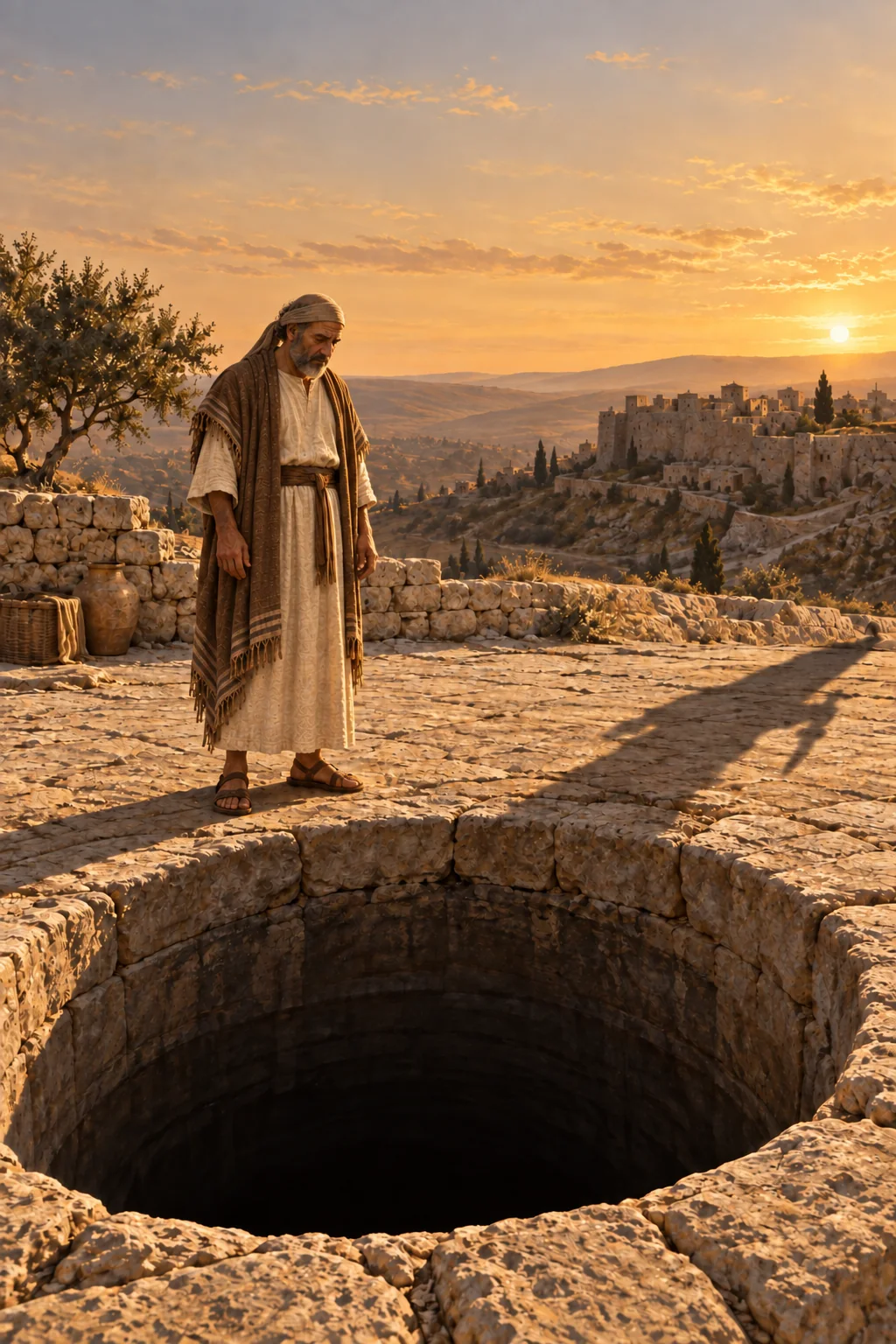
The Fall of Gedaliah ben Achikam
“The kingdom is gone. The people are not.”
Jerusalem has burned. The Temple is gone, the king is captive, and Babylon rules what remains. Gedaliah ben Achikam accepts an impossible charge: keep the Jewish remnant alive in its land through an exile that prophecy says cannot yet be ended.
For one harvest, he succeeds. Refugees return. Vines bear fruit. Then Ishmael ben Netaniah, a surviving prince backed by the king of Ammon, decides that survival under foreign rule is another name for surrender. He comes to Gedaliah's New Year table promising restoration.
His violence will not restore the kingdom. It will complete the exile.
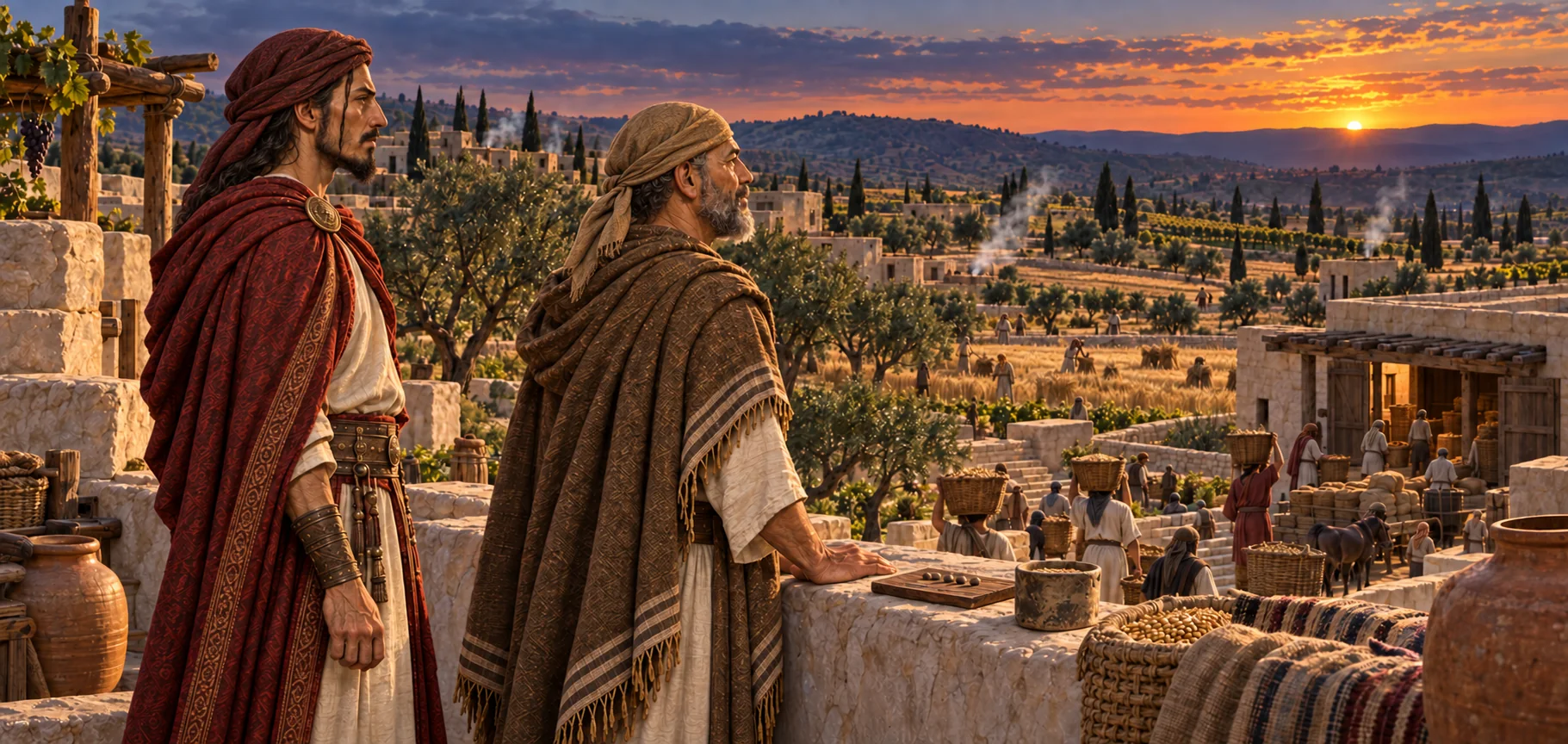
The tragedy does not turn on courage versus cowardice. It turns on leaders who read the same danger through different ideas of what the Jewish future now requires.
He reads Jeremiah's prophecy as a command to live through exile, cultivate the land, and keep the remnant alive. His error is not cooperation. It is refusing reasonable safeguards against a credible threat.
He speaks the language of royal continuity while depending on Baalis of Ammon. His attempt to restore a dynasty destroys the people through whom any future could continue.
He sees the danger Gedaliah dismisses. After the massacre, his vigilance hardens into universal distrust, and he leads the survivors toward Egypt against Jeremiah's warning.
Distinct silhouettes, colors, gestures, and moral positions keep the cast legible in crowds and intimate scenes alike.
A practical leader trying to preserve Jewish life after political independence has ended. He can distinguish rumor from guilt, but not accusation from precaution.
A man of royal blood who mistakes dynastic resistance for national continuity, even as his project serves a foreign king.
The watchful commander who names the danger, proposes safeguards, mounts the rescue, and later repeats Gedaliah's failure in reverse.
A survivor of the royal household who protects her younger sister and rejects the claim that a dynasty can be restored by destroying its remaining people.
Select an image to view it at a larger size. Captions stay below the art so faces, actions, and spatial clues remain unobstructed.
The edition opens with a twenty-page bilingual reader presenting the relevant biblical passages in original Hebrew beside a modern English rendering. The reader can see what the text says before encountering the book's interpretation.
The primary narrative comes from Jeremiah 40–43 and II Kings 25, read in the larger prophetic frame of Jeremiah 27 and 29. The back matter also distinguishes the adaptation's national-exile interpretation from the Sages' separate teaching about responsible caution.
Interpretive note: the claim that Gedaliah understands exile as the necessary historical task, while Ishmael mistakes resistance for continuity, is this adaptation's reading of the sources. It is not presented as a direct quotation or explicit formulation of Chazal.
Modern sentence structure, explicit speakers, and short contextual notes keep the sequence legible without importing archaic English into the story.
המקורות מופיעים לפני הסיפור, לצד תרגום אנגלי עכשווי ומדריך קצר לקורא.
The digital edition preserves the full narrative, the source reader, and the historical apparatus in one searchable, bookmarked file.
Intended for adult readers. Contains political assassination, implied mass violence, deaths of civilians, war aftermath, and themes of grief and forced displacement. No sexual content or graphic wounds.
The web PDF is screen-optimized, tagged, searchable, and retains all 108 pages. It is not the printer-upload file.
Open the complete 108-page book in your browser or save the screen-optimized edition for later reading. The high-resolution production master remains separate.
Golan Ben-Oni
OpenAI Codex
OpenAI image generation
Scripture, traditional commentary, historical scholarship, and documented Iron Age material culture are identified in the edition's notes.
Author-authorized digital production edition. No independent specialist, legal, printer, or physical-proof approval is claimed.
No excavation photograph, museum scan, modern map, or scholarly illustration is reproduced in the artwork shown here.